
The situation most indie developers find themselves in
You have an active or upcoming indie PC game. The Steam page is live. You have posted about it more than once.
And still the wishlist number barely moves.
This is the point where frustration sets in. Not because you did nothing, but because nothing seems to connect. You start searching how to market a game on Steam and quickly realize most advice assumes momentum you do not have.
Many indie developers are not asking how to scale. They are asking how to get first wishlists on Steam, how to grow wishlists organically, or how to get Steam wishlists without ads when there is no audience yet.
This article is written for that exact situation. It focuses on why wishlists stall, why Steam feels unresponsive, and what kind of system actually works when you are starting from near zero.
Why Steam marketing feels broken in practice
Steam marketing feels difficult because Steam is not a traditional marketing platform. It does not reward effort, frequency, or presence. It reacts to patterns in player behavior.
Steam reacts to signals, not intentions
Steam does not know how much work went into your game. It only sees what players do.
Do they click Do they scroll Do they watch Do they wishlist
If players arrive and leave without commitment, Steam reads uncertainty. If engagement happens once and never repeats, Steam reads noise.
This is why many developers feel invisible even when actively promoting. Steam is not ignoring you. It is waiting for clearer signals.

Early data shapes everything that follows
The first interactions your Steam page receives matter far more than most developers expect.
If early visitors bounce or hesitate, Steam learns that the page does not convert. That impression becomes the baseline.
This is why sending broad traffic too early often leads to a Steam wishlist stuck at zero. Steam sees interest without confidence.
Players decide faster than developers think
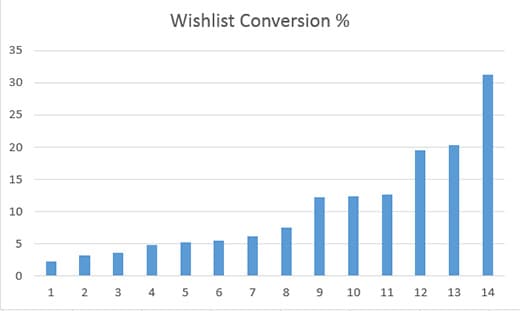
Players do not read your page carefully. They scan.
They want to know very quickly: What kind of game is this Is it for someone like me Is it worth remembering
If the answer is unclear, the session ends. Even if the game is good.
Clarity beats depth at this stage.
Steam does not help before proof exists
Many developers expect Steam to promote their game once the page is live.
Steam does not do that. It observes first.
This is why how to market a Steam game before launch requires intent and control. Steam will not create momentum for you. It will only amplify momentum that already exists.

Common mistakes that stop wishlist growth
These mistakes are common among serious indie developers, not beginners.
Launching the Steam page before it is ready
Opening a page early feels productive. If the message is unclear, it backfires.
Early low conversion teaches Steam that your page is weak. That signal is hard to undo later.
Launching later with a clearer promise often works better than launching early without one.
Trying to promote everywhere at once
Posting on every platform spreads effort thin.
Most channels send low intent traffic unless used deeply. Early Steam marketing benefits more from focus than coverage.
Explaining mechanics instead of experience
Developers love systems. Players want the fantasy.
If the page explains how the game works before why it matters, players hesitate. Hesitation kills wishlists.
Copying tactics without context
What worked for a successful game often depended on timing, trust, or existing visibility.
Copying visible actions without context rarely works for small teams.
Waiting for Steam to notice you
Steam notices patterns, not patience.
Waiting without a system rarely produces results.
The system that actually works for growing wishlists
If you want to understand how to grow wishlists on Steam organically, you need a system that aligns positioning, traffic, and conversion.
Step one: positioning before promotion
Before sending traffic, answer one question clearly.
Who is this game for right now.
Not everyone who might like it eventually. A specific player who will recognize it immediately.
What fantasy does the game deliver What frustration does it resolve What similar games already exist
Clear positioning creates instant familiarity.
Step two: intentional traffic, not volume
Early traffic should already care about games like yours.
Small genre communities often outperform large platforms at this stage. The goal is not reach. It is conversion.
A few aligned wishlists matter more than many empty visits.
Step three: confirmation on the Steam page
When players arrive, the page must confirm expectations.
Capsule, screenshots, and opening text should match the promise that brought them there.
If the page confirms expectations, players feel safe wishlisting. If it surprises them, they hesitate.
Step four: repetition to build patterns
One wishlist does not matter. Repeated similar behavior does.
Consistent small pushes that convert create the first pattern Steam can read.
This is how Steam marketing begins to work.
How to get wishlists before launch on Steam
Pre launch marketing is not about hype. It is about validation.
Focus on readiness, not urgency
Promoting too early produces weak signals. Waiting until messaging and visuals align produces stronger early data.
Use demos as confidence builders
A demo should prove a specific promise, not show everything.
Players need confidence, not completeness.
Build small consistent signals
A few aligned wishlists repeated over time matter more than one big spike.
Steam reacts to patterns.
Practical examples from indie PC games
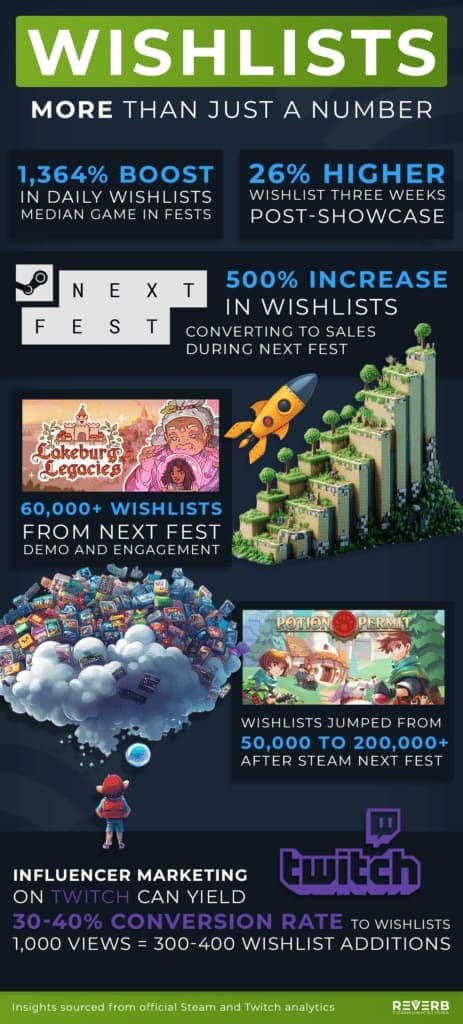
From zero wishlists to steady growth
A strategy game launched with broad messaging. Traffic came, wishlists did not.
After narrowing positioning to a specific subgenre, conversion improved without new traffic.
Steam page with no wishlists fixed by clarity
A developer rewrote the page to focus on player fantasy instead of systems.
Wishlist growth started without changing promotion channels.
Delaying launch prevented negative signals
A team delayed their Steam page to clarify the core experience.
When the page went live, early conversion was strong and momentum followed.
Clear takeaways
Steam does not reward effort, it rewards signals. Wishlists grow when confidence is clear. Early traffic should be intentional. The Steam page is a decision environment, not documentation. Patterns matter more than spikes. Learning how to market a game on Steam requires system thinking.
A calm next step if you want clarity
If you are unsure why your wishlists are not growing or how to market an indie game on Steam effectively, a focused audit or diagnostic review can help identify where alignment breaks and what to adjust next.