
Introduction. Why marketing for video games feels confusing even when you are doing the work
If you are an indie PC developer or a small studio working toward a Steam release, you are probably not ignoring marketing. You post updates. You share clips. You tweet. You open a Discord. You maybe run a playtest. Yet months pass and wishlists grow slowly or not at all.
This is the real frustration behind marketing for video games today. It is not a lack of effort. It is a lack of clarity. You do many things but you do not know which ones matter, which ones connect, and which ones actually lead to Steam wishlists.
Most advice about how to do marketing for video games focuses on actions. Post more. Reach out to creators. Improve your capsule. Launch a demo. None of that explains why progress feels random or why two similar games can see completely different results.
This article is written for developers and marketers who already have a real project. You are not looking for motivation. You are looking for a system. Something that explains what is happening, why it is happening, and what to change.
Why this problem happens in practice
The core problem with marketing for video games is not discoverability. It is fragmentation.
Steam does not reward isolated actions. Social platforms do not reward isolated actions. Players do not respond to isolated actions. Everything works as a system, but most teams approach it as a checklist.
Here are the real reasons this problem shows up again and again.
The platform logic is hidden
Steam wishlist marketing looks simple on the surface. More wishlists equals better visibility. But the platform does not tell you which actions cause which outcomes. You see wishlist numbers, follower numbers, traffic sources, but not the full picture of intent.
Developers often assume that any traffic is good traffic. In reality, Steam reacts very differently to players who arrive with context versus players who arrive cold.
Marketing advice is optimized for content, not conversion
Most public advice about how to get wishlists on Steam comes from people who are good at content creation. That advice is usually correct in isolation, but it stops before the hard part.
Content can bring attention. It does not automatically create desire. It does not automatically create trust. And it does not automatically lead to a click on the wishlist button.
Indie teams copy large studio tactics without the leverage
Big publishers use brand recognition, paid reach, and platform partnerships. Indie teams try to replicate the surface level tactics without the underlying leverage.
You end up doing things that look like marketing but do not function as marketing for your situation.
There is no shared mental model inside the team
In many teams, marketing exists as a loose responsibility. One person posts. Another updates the page. Another talks to creators. There is no shared understanding of what the system is supposed to achieve at each stage.
Without that model, effort spreads thin and results stall.
Common mistakes and ineffective approaches
Before building the right system, it helps to clearly name what does not work and why.
Chasing visibility without intent
Getting views, likes, or impressions feels productive. But visibility without intent does not translate into wishlists.
A short clip that goes viral among players who do not play your genre does not help Steam wishlist marketing. It can even hurt by sending low intent traffic that bounces.
Treating wishlists as a single action
Many developers ask how to get wishlists on Steam as if it is one decision. In reality, wishlisting is the final step in a chain of micro decisions.
Players decide whether to watch. Then whether to read. Then whether to trust. Then whether to imagine themselves playing. Only then do they wishlist.
Skipping steps in that chain leads to low conversion.
Over polishing the store page too early
A perfect store page does not fix unclear positioning. Developers often spend weeks tweaking screenshots and copy before they understand who the game is for and why those players should care.
Polish amplifies clarity. It does not create it.
Random outreach to creators
Sending hundreds of emails without a clear angle usually fails. Creators do not promote games. They promote ideas that fit their audience.
Without a defined hook and context, outreach becomes noise.
Measuring the wrong signals
Follower counts and social engagement are easy to see. Wishlist velocity, conversion rates, and source quality are harder to interpret.
Teams often optimize what is visible instead of what actually moves the algorithm.
The correct system for marketing for video games
Effective marketing for video games is not a collection of tricks. It is a system built around player intent and platform feedback.
At a high level, the system has four layers that build on each other.
Layer one. Audience clarity
You need to know who the game is for at a genre and subgenre level, but also at a motivation level.
Why do players play games like yours. What emotional or strategic need does it fulfill. What games do they already love.
This is not a persona exercise. It is about understanding context.
Layer two. Message alignment
Every public touchpoint should communicate the same core promise.
Your trailer, your screenshots, your short clips, your Steam description, and your outreach angle should all reinforce the same reason to care.
If different channels tell different stories, players hesitate.
Layer three. Traffic with context
Traffic only matters if it arrives with understanding.
A player who sees your game in a genre specific community, from a creator they trust, or after seeing multiple consistent signals behaves very differently from a player who sees one random clip.
Steam wishlist marketing works best when traffic arrives warm, not wide.
Layer four. Feedback loops
Steam gives signals, but you have to interpret them.
Wishlist velocity after updates. Conversion from external traffic. Follower growth relative to impressions. These are feedback loops that tell you whether the system is aligned.
When something does not work, you adjust the layer, not just the tactic.
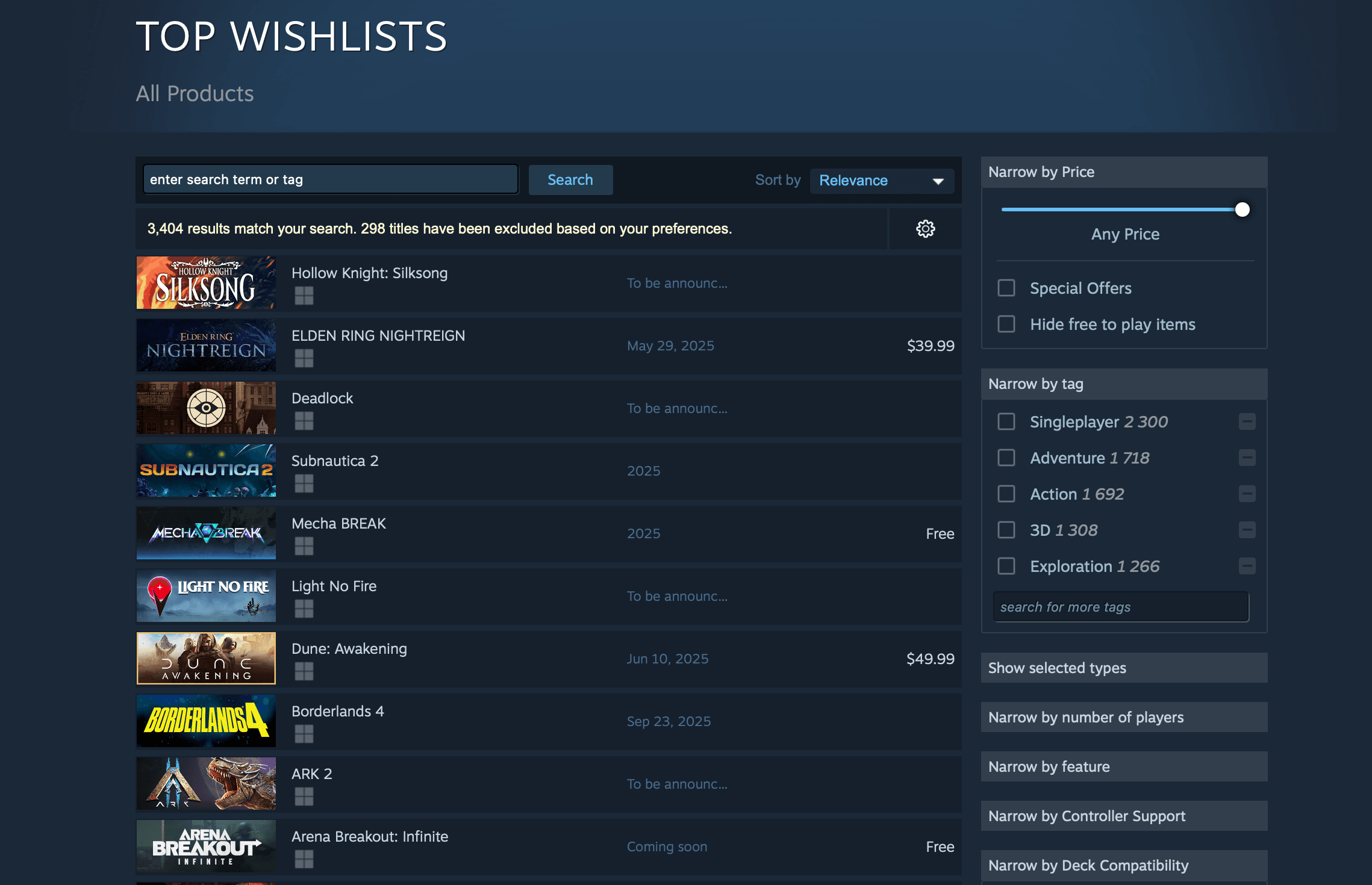
How this system answers the real question
When developers ask how to do marketing for video games, they are usually asking which actions to take next.
The system answers a better question. Why an action should work in the first place.
Without that answer, you are guessing.
Practical examples for indie PC and Steam games
To make this concrete, here are examples of how the system applies in real situations.
Example one. Early stage Steam page with slow wishlist growth
Problem The page is live. You post updates. Wishlists grow slowly.
Cause Audience clarity is weak. The page attracts general interest but not a specific group.
Fix Refine the core message to speak directly to a known subgenre audience. Adjust tags, short description, and visuals to emphasize the primary fantasy. Then bring traffic only from places where that audience already exists.
Result Lower traffic volume, higher wishlist conversion, better algorithm response.
Example two. Social content with good engagement but no wishlist lift
Problem Clips get likes and comments but wishlist numbers do not change.
Cause Content entertains but does not transition viewers into store context.
Fix Reframe content to answer why the game exists and what makes it different. Add narrative continuity across posts. Encourage viewers to learn more rather than just react.
Result Fewer viral spikes, more consistent wishlist growth.
Example three. Creator outreach with low response rates
Problem Most emails are ignored or declined.
Cause Outreach is generic and framed around the game, not the creator audience.
Fix Research creators by audience overlap. Pitch a specific angle that fits their content style. Provide context and assets that reduce effort.
Result Fewer emails sent, higher acceptance, better quality traffic.
Example four. Demo launch that does not move the needle
Problem Demo is live but wishlist impact is minimal.
Cause Demo exists without a narrative or reason to play now.
Fix Position the demo as an event. Tie it to updates, content beats, and creator coverage. Clarify what feedback matters and why early players are important.
Result Higher engagement, stronger feedback signals, improved visibility.
How steam wishlist marketing actually compounds
One of the most misunderstood parts of steam wishlist marketing is timing.
Wishlists do not just accumulate. They compound when actions reinforce each other.
One of the most misunderstood aspects of steam wishlist marketing is timing.
Wishlists don't just grow randomly; they build momentum when actions support each other.
When audience understanding improves, conversion rates go up. Higher conversion leads Steam to test your game more. As Steam tests more, your game's visibility increases. When visibility and good conversion work together, the growth cycle speeds up.
Breaking into this cycle isn't about one big moment. It's about alignment
When audience clarity improves, conversion improves. When conversion improves, Steam tests your game more. When Steam tests more, visibility increases. When visibility increases with good conversion, the loop accelerates.
Breaking into that loop is not about one big moment. It is about alignment.
Clear takeaways
Marketing for video games works when approached as a system, not just a checklist.
Visibility without purpose doesn't help. Traffic without context doesn't convert. Content without alignment doesn't build trust.
The teams that succeed are not louder; they are clearer.
If you are stuck, the problem is usually not effort. It is structure.
Final thoughts
Indie game marketing is not about competing with larger studios. It is about building a path that makes sense for your game and your Indie game marketing isn't about competing with bigger studios. It's about creating a path that makes sense for your game and your audience.
Once the system is set up, it's easier to choose actions. You stop wondering what to post and start grasping why something works.
That's when marketing stops feeling like noise and begins feeling like progress.
audience.
Once the system is in place, actions become easier to choose. You stop asking what to post and start understanding why something works.
That is when marketing stops feeling like noise and starts feeling like progress.
If you are preparing for a launch or trying to unlock better wishlist growth, a calm expert review can help identify where the system needs adjustment. Sometimes a small change in positioning or flow makes a measurable difference.