
The real situation most indie developers are in
If you are an indie PC developer working on an active or upcoming Steam project, you are probably not looking for basic advice. You already know that wishlists matter. You already have a Steam page. You may have a trailer, screenshots, maybe a demo, and months or years of development behind you.
Yet wishlist growth feels slow, unstable, or disconnected from the effort you put in.
Some days you see a small spike. Most days nothing meaningful happens. Steam does not seem to react.
This is the moment when steam wishlist marketing stops being a surface level topic and becomes a structural problem. Not a motivation issue. Not a quality issue. A systems issue.
Many developers at this stage start searching for how to get wishlists on Steam, hoping to find a missing tactic. What they usually need instead is a clearer understanding of why Steam behaves the way it does and how their current actions translate into signals.
This article is written for developers who already have a real project and want traction that makes sense and compounds over time.
Why steam wishlist marketing fails in practice
Most Steam games do not fail because nobody sees them. They fail because Steam cannot clearly read demand from player behavior.
Steam is not designed to discover hidden gems on its own. It is designed to react to patterns. If those patterns are weak or inconsistent, Steam stays neutral.
Neutral means no traction.
Steam is a signal interpretation system
Steam observes what happens when players encounter your game. It tracks clicks, page views, trailer engagement, scrolling behavior, follows, and wishlist adds.
It does not care about intentions or effort. It does not care how long development took.
It only cares about outcomes.
If players arrive and leave quickly, Steam reads low interest. If players engage but do not wishlist, Steam reads uncertainty. If activity happens once and never repeats, Steam reads noise.
Steam wishlist marketing works only when behavior forms a pattern that Steam can trust.
Players decide faster than developers expect
Many developers assume players carefully evaluate their Steam page. In reality, players make decisions extremely fast.
They scan visuals. They glance at the capsule. They read a few words.
Within seconds, they decide whether the game belongs to a mental category they care about.
If that category is unclear, the session ends.
This happens even with well made games. Clarity matters more than depth at this stage.
Traffic alone does not create momentum
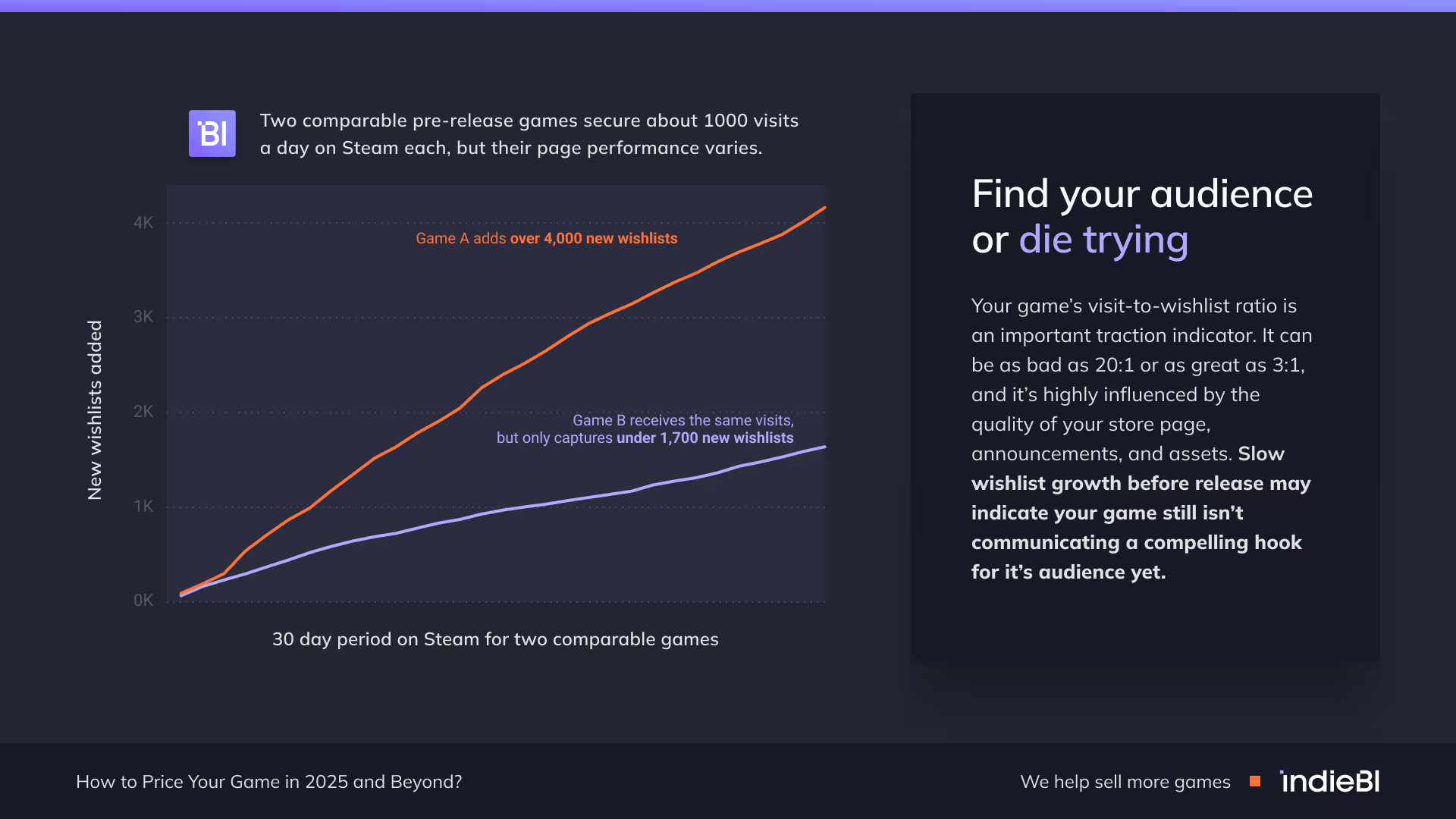
A common belief is that more traffic equals more wishlists. In practice, traffic without intent often hurts more than it helps.
When players arrive without a strong reason to care, they bounce. Steam sees visits without conversion. That weakens perceived demand.
This is why many developers feel stuck despite getting views, clicks, or impressions.
Marketing and store pages often tell different stories

Another frequent issue is misalignment between marketing messages and the Steam page itself.
A post frames the game as narrative driven. The page opens with mechanics and systems.
A trailer highlights action. The description emphasizes slow progression.
Steam does not see potential. It sees confusion.
Confusion reduces confidence. Reduced confidence means fewer wishlists.
Timing is misunderstood
Festivals, demos, and announcements do not create traction by themselves. They amplify what already exists.
If your message is unclear, timing amplifies confusion. If your positioning is strong, timing amplifies confidence.
This is why the same event can produce strong results for one game and almost nothing for another.
Common mistakes that stall wishlist growth
These mistakes are common among experienced developers, not beginners.
Treating wishlists as the strategy
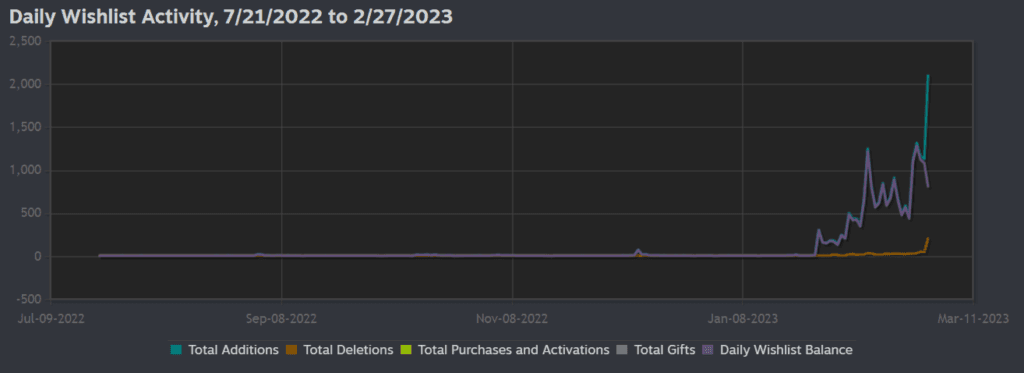
Wishlists are an output, not a plan.
When developers focus on increasing the number directly, they often chase actions that look productive but do not build long term momentum.
The real question is why someone would wishlist your game right now, not how to push the button more often.
Trying to appeal to everyone who likes the genre
Broad positioning feels safe. It rarely converts well.
Steam favors games that are clearly meant for a specific audience. A smaller audience with high confidence sends stronger signals than a large audience with mixed interest.
Clear positioning almost always outperforms generic positioning.
Copying tactics without understanding context
It is tempting to copy visible actions from successful games. Devlogs, influencer outreach, social posting frequency.
What is often missing is context. Existing audience trust, timing, genre demand, or external momentum.
Without that context, the same actions produce very different outcomes.
Producing content without a clear role
Posting regularly can feel like progress. But content without a defined role in the wishlist system rarely compounds.
If content does not move players closer to understanding and confidence, it becomes background noise.
Waiting for quality to speak for itself
Quality matters, but Steam cannot evaluate potential. Only players can.
If players do not quickly understand why your game matters to them, quality remains invisible.
This is why strong games often struggle with steam wishlist marketing while simpler but clearer games move faster.
The system behind effective steam wishlist marketing
To understand how to get wishlists on Steam in a sustainable way, you need to think in systems rather than isolated tactics.
A useful framework consists of three connected layers: audience clarity, signal creation, and reinforcement.
Audience clarity is the foundation
Everything starts with knowing who the game is for.
Not everyone who likes the genre. Not everyone who plays indie games.
You need a clear mental model of the player who will immediately recognize themselves in your game.
What fantasy are they seeking What frustration are they escaping What references already resonate
This clarity guides messaging, visuals, and channel choices.
Signal creation must be intentional
Once the audience is clear, marketing actions should create specific, readable signals.
Traffic sources should already filter for interest. Messages should set expectations clearly. The Steam page should confirm what brought the player there.
When intent and behavior align, Steam sees confidence.
Reinforcement matters more than spikes
One big spike rarely changes anything. Repeated smaller pushes that behave similarly create patterns.
Steam reacts to patterns.
Consistency in message, audience, and behavior matters more than reach.
The Steam page is a decision environment
Your Steam page is not a brochure. It is where curiosity turns into confidence or doubt.
Every element should answer three questions quickly: What is this game Who is it for Why should I care now
If the page cannot answer these clearly, no amount of traffic will fix it.
Development and marketing influence each other
Sometimes the most effective marketing change is a product change.
Clarifying the core experience often improves conversion more than adding features.
This is where many teams unlock wishlist growth without increasing promotional effort.
Practical examples from indie PC and Steam games
These examples reflect common situations faced by indie developers.
Example one: Clarity over complexity
A strategy game focused heavily on depth and long term systems. The page explained mechanics in detail but failed to communicate the fantasy.
After reframing the page around the player experience and emotional payoff, wishlist conversion increased noticeably without adding traffic.
The game did not change. The signal did.
Example two: Focus beats coverage
A developer promoted their game across many platforms with minimal effect. After focusing on one genre specific community and adapting messaging to that audience, engagement improved.
Steam responded to consistency, not volume.
Example three: Demo as proof, not content
A demo launched during an event attracted players but few wishlists. Players tried it but did not commit.
After repositioning the demo as proof of a specific experience players already wanted, wishlist adds increased without changing the demo itself.
Context changed behavior.
Example four: Waiting for readiness
An early announcement created weak signals. Later, once visuals and messaging were aligned, the same announcement approach produced stronger engagement.
Steam rewarded readiness rather than urgency.
How to diagnose your own wishlist problem
If you are actively searching how to get wishlists on Steam and feel stuck, these questions usually reveal the issue.
Can someone describe your game correctly after ten seconds on the page Does your traffic source match your store message Are players arriving with intent or just curiosity Do wishlist adds correlate with specific actions Is your positioning consistent across touchpoints
Weak answers here point to system problems rather than effort problems.
Most stalled projects do not need more promotion. They need better alignment.
Clear takeaways
Steam wishlist marketing is about signal clarity, not exposure. Wishlists reflect confidence and relevance. Traffic without intent weakens momentum. Clear positioning converts better than detailed explanations. Consistency creates patterns Steam can amplify. Understanding how to get wishlists on Steam requires system thinking, not tactics.
A quiet option for outside clarity
If you want a neutral external perspective on why your Steam page or current marketing efforts are not producing the wishlist growth you expect, a focused audit or diagnostic review can help identify what is misaligned and what to adjust next.